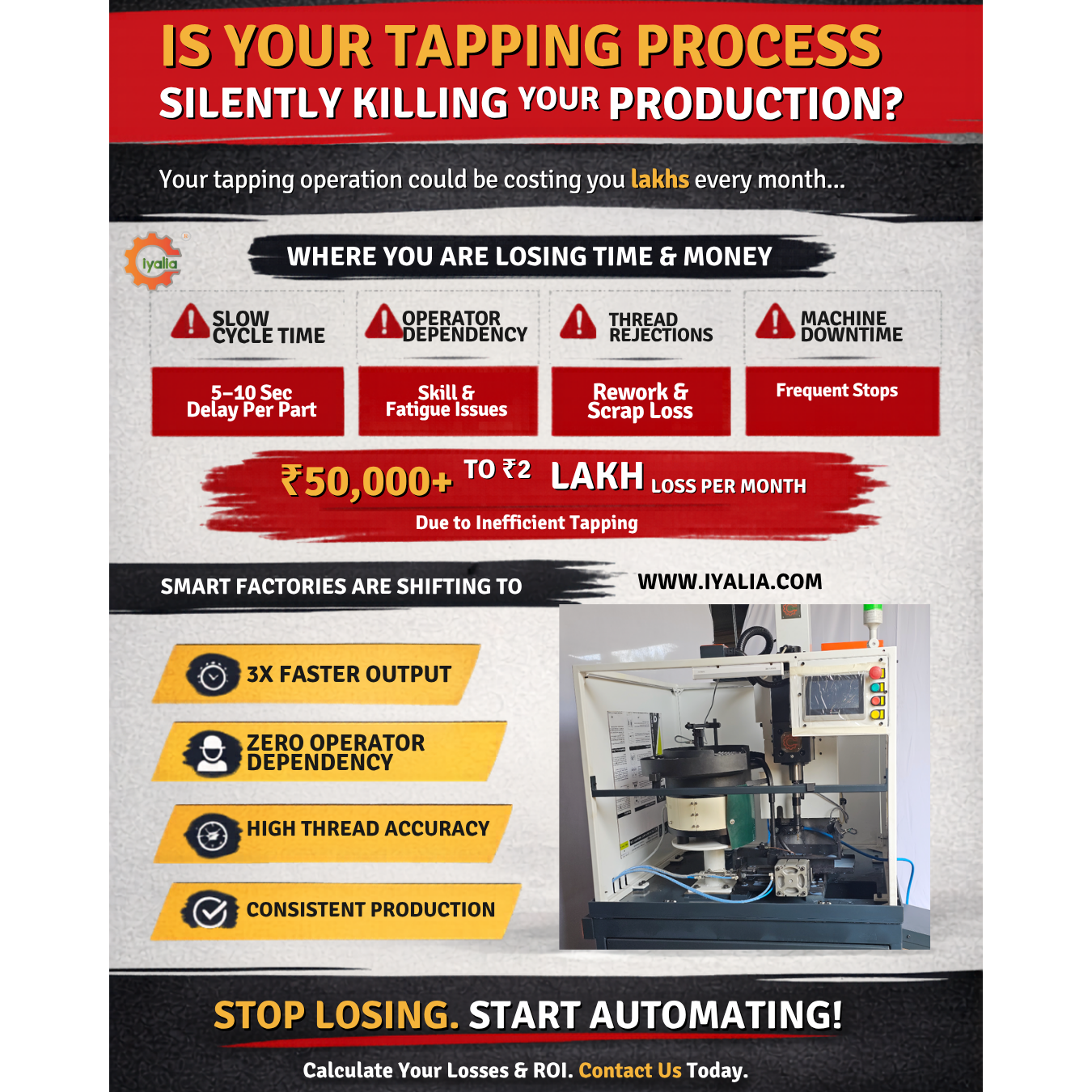
Why Your Tapping Process Is Quietly Killing Your Production Targets And Costing More Every Day
You may not notice it.
Your reports may not show it clearly.
But every single day…
your tapping process could be silently reducing your production output — and your profits.
👉 Not by 5%
👉 Not by 10%
But sometimes by 30% to 50% loss in efficiency
And the worst part?
Most factories don’t even realize it.
🧠 The Hidden Problem No One Talks About
Production managers often focus on:
- CNC machines
- Cutting tools
- Assembly lines
But ignore one small process:
👉 Tapping
Because it looks “simple”
But in reality…
⚠️ It becomes the slowest and weakest link in the entire production chain.
⚙️ Where Exactly You Are Losing Production
Let’s break it down practically.
❌ 1. Cycle Time Loss (Biggest Killer)
Manual or semi-auto tapping:
- Takes more time per component
- Has variation between operators
- Slows down the entire batch
👉 Even 5 seconds extra per part
= hundreds of components lost per shift
❌ 2. Operator Dependency
Your output depends on:
- Skill
- Mood
- Fatigue
- Experience
👉 Which means:
Your production is not controlled by your system — but by people
❌ 3. Rework & Rejection
Thread issues:
- Improper depth
- Damaged threads
- Misalignment
👉 Leads to:
- Rework time
- Scrap
- Customer complaints
❌ 4. Machine Idle Time
Loading delays
Tool adjustments
Manual handling
👉 All add up to hidden downtime
💰 Let’s Talk Numbers (ROI Reality Check)
Let’s assume:
- You produce: 1,000 components/day
- Extra delay per part: 5 seconds
👉 That equals:
~1.4 hours lost per day
Now calculate monthly:
👉 ~35 hours lost/month
👉 That’s almost 4–5 full production days lost
💸 What Does That Mean in Money?
- Labor cost wasted
- Machine underutilized
- Orders delayed
- Revenue loss
👉 Easily ₹50,000 to ₹2,00,000+ loss per month (depending on scale)
And this is from just one process — tapping
🚀 The Shift Smart Factories Are Making
Smart manufacturers are not adding more labor.
They are eliminating the problem.
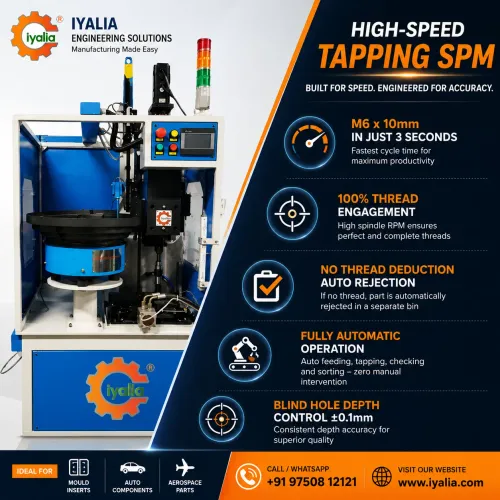
👉 By moving to Fully Automatic Multi-Spindle Tapping Machines
🔧 What Changes After Automation?
✅ Consistent Cycle Time
No variation. Every part same speed.
✅ Multi-Component Processing
1 → 2 → 4 components per cycle
👉 Instant productivity jump
✅ Zero Operator Dependency
Machine controls output — not humans
✅ Near-Zero Rejection
Precision-controlled tapping ensures quality
✅ Continuous Production
Runs shift after shift without drop in performance
📊 Real Impact
Factories switching to automatic tapping report:
- 📈 Up to 3X increase in output
- ⏱️ 30–50% reduction in cycle time
- 🔁 Significant drop in rejection
- 💰 ROI achieved in months, not years
🧠 The Real Question You Should Ask
Not:❌ “Do I need an automatic tapping machine?”
But:✅ “How much am I losing every day without it?”
🏁 Conclusion
Tapping may look like a small operation.
But in mass production…
👉 It decides your speed
👉 It decides your quality
👉 It decides your profit
If your targets are not being met consistently —
you already know where to look.
📞 Call to Action Coimbatore
Want to calculate your actual production loss and ROI?
👉 Contact us — we’ll help you analyze your current tapping process and show you the improvement potential.